

Three Takeaways from 2026 Boston Climate Week
.png)
.webp)

.svg)
What Boston Climate Week 2026 Revealed About Food and Beverage Manufacturing's Hidden Climate Problem
Boston held its inaugural Boston Climate Week this year, with conversations centered around renewable energy, EV infrastructure, hydrogen, and grid modernization.
These sectors represent substantial progress in critical climatech sectors and often take the spotlight in these conversations — and for good reason.
But there’s one sector that is often overlooked for its potential impact on climate food and beverage manufacturing technology
Food manufacturing’s impact on climate is usually discussed through the lens of agriculture, livestock emissions, fertilizer use, or transportation. While important, they fall outside the scope of the factory walls and what plant operators directly control from inside a facility.
The biggest challenge climatech can address inside manufacturing plants is operational waste.
Every day, food and beverage facilities waste water, chemicals, energy, and production time through outdated operating assumptions that were designed around safety buffers instead of real-time process visibility.
And as manufacturers face increasing pressure around conservation and sustainability goals, utility costs, and production efficiency, the climate conversation inside industrial operations is starting to shift.

1. Climate Tech needs a greater focus on Food & Beverage manufacturing innovation
Climate-tech conversations often focus on large-scale infrastructure from energy generation to transportation. Small-scale projects when adopted and deployed also offer transformation change. Take the operational inefficiencies happening every day inside manufacturing facilities.
Why Food and Beverage Manufacturing Emissions Are Different From Agricultural Emissions
Food systems account for roughly one-third of global greenhouse gas emissions. Manufacturing operations alone contribute significantly through utility consumption, thermal energy usage, wastewater generation, and production inefficiencies.
Inside many food and beverage plants today, boilers continue heating water longer than necessary. Pumps continue circulating cleaning chemicals because a timer says the cycle ends in 45 minutes instead of because the line is actually clean.
Much of that waste remains invisible because many facilities still lack real-time visibility into what is physically happening inside the process.
That matters for both Scope 1 and Scope 2 emissions.
Scope 1 emissions include direct emissions generated inside a facility from equipment like boilers, steam systems, and production operations. Scope 2 emissions include indirect emissions tied to purchased electricity and energy usage.
How Inefficient Clean-In-Place Drives Water, Energy, and Chemical Waste in Food Plants
In food manufacturing, excessive cleaning runtimes directly increase both Scope 1 and 2 emissions.
A facility running Clean-In-Place (CIP) systems 15–20% longer than necessary across dozens of production lines can waste millions of gallons of water and significant amounts of energy every year without operators realizing the scale of the loss.
The reality is that manufacturing innovation has become climate innovation.
2. The Case for Sustainability Innovation is Stronger When Tied to Profitability
One of the biggest reasons sustainability projects stall inside industrial manufacturing is that plants are not evaluated on sustainability metrics alone.
Plant operators are measured on uptime, throughput, reliability, and margin.
If a sustainability initiative cannot improve operational performance alongside environmental impact, it often struggles to gain traction.
The financial impact of production waste that impacts sustainability also compounds in added cost quietly across thousands of cycles.
Longer-than-necessary CIP and product changeover cycles increase:
- Water usage
- Chemical consumption
- Energy demand
- Wastewater generation
- Lost production uptime
Manufacturers who move ahead of the food and beverage innovation curve do not treat climatech initiatives as sustainability projects alone. They treat them as operational improvement projects that also reduce emissions and utility usage.
3. The next wave of food and beverage innovation is process aware automation
Why Timer-Based CIP Systems Create Water and Energy Waste
Automation is no longer enough to drive transformation on the factory floor. Process aware automation is the next climate tech leap that will advance sustainable and productivity innovation.
Many Clean-In-Place systems in food and beverage facilities still operate primarily on fixed, timer-based cycles and schedules. If a cleaning cycle was originally set for 45 minutes when designed years ago, the line often continues running for the full 45 minutes regardless of whether the equipment was already clean after 32 minutes. Sometimes, it may run even longer if an operator added in additional safety buffers along the way.
Most facilities simply do not have the process visibility of real-time line conditions required to confidently shorten cleaning cycles.
Process aware AI models rely on real-time data from inline sensors to deliver the real-time visibility that will completely change how operators think about their operations.
Laminar spectral sensors and process aware AI models use spectral fingerprints to detect what is physically moving through the line, including:
- Product residue
- Chemicals and caustic
- Rinse water
- Fully clean conditions
The unprecedented level of inline insight changes the operational decision-making process entirely.
Instead of operators ending a CIP cycle because a timer expired, process aware automation ends the cycle when real-time process data confirms the line is clean. Greater precision and accuracy with less manual intervention.
The result is shorter cleaning cycles, lower utility consumption, reduced wastewater generation, and faster production recovery without compromising sanitation standards.
Real-World Examples of Climate-Tech in Food and Beverage Manufacturing Operations
Here’s a few examples of how Laminar uses process aware AI to align sustainability and productivity outcomes in food and beverage manufacturing:
At Unilever’s Poznań foods facility, Laminar reduced cleaning times by 20%, lowered utility consumption by 10%, and generated approximately €100,000 in annual savings per production line.
At a global beverage manufacturing facility, Laminar reduced plant-wide CIP cycle times by 30% while also reducing changeover times by 31–48%, generating approximately $2 million in annual savings per plant.
These projects gained traction because the operational ROI was immediate and measurable. The sustainability impact came directly from running the plant more efficiently.
Key Takeaways from 2026 Boston Climate Week
- Climate-tech conversations should include more ideas for manufacturing innovation, including food and beverage technology deployed inside manufacturing facilities.
- Food and beverage manufacturing has a significant opportunity to reduce water, energy, chemical, and production of waste through process-level improvements.
- Sustainability projects scale faster when they also improve uptime, throughput, and operational efficiency.
- The industry is moving away from timer-based operations toward real-time process aware automation
- Manufacturers that deploy process aware AI see measurable progress with shorter CIP runtimes that do not compromise food safety or sanitation standards.
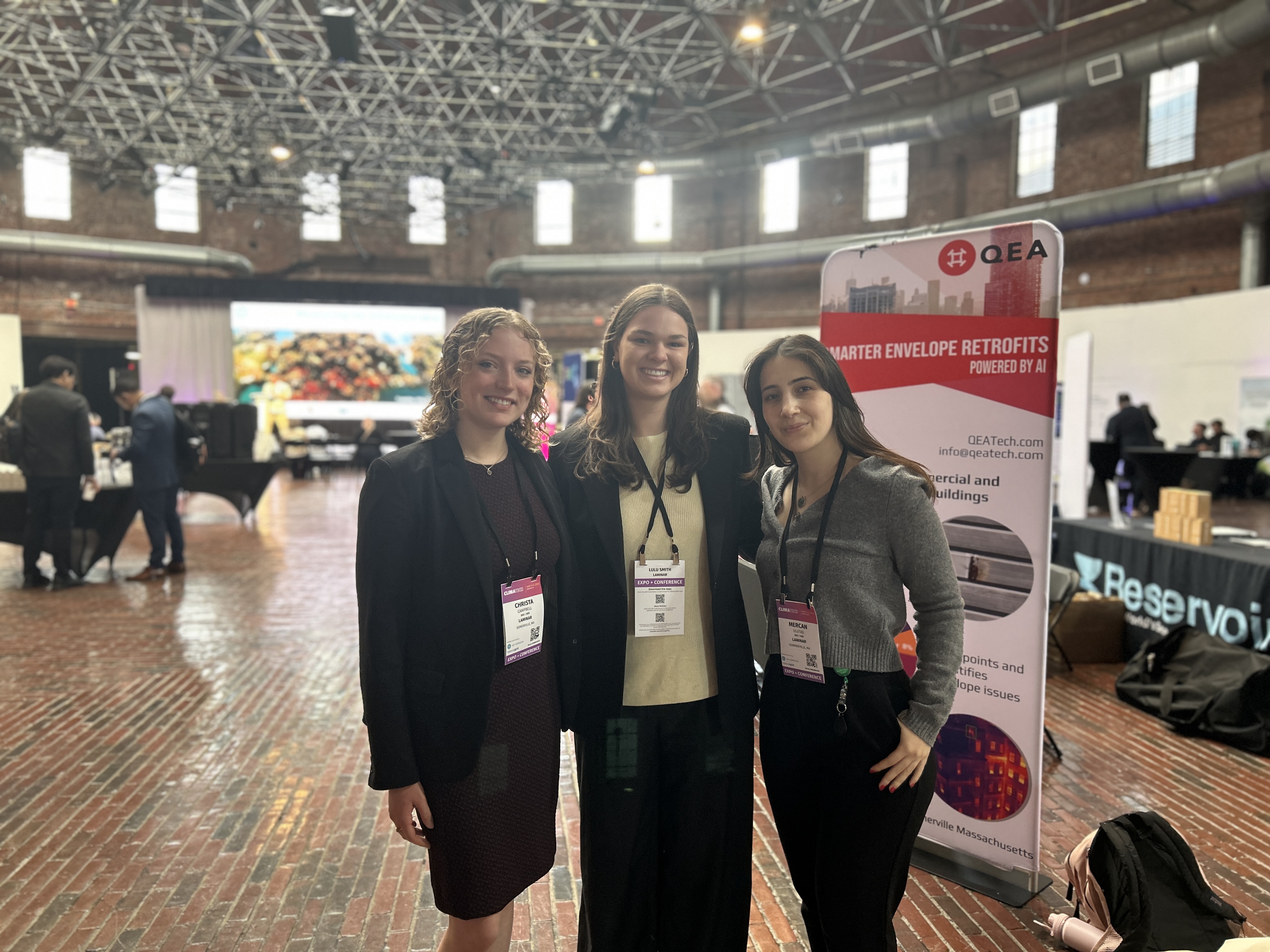
- The inaugural Boston Climate Week was an exciting moment in time, highlighted how much momentum exists across climate-tech in the Boston community.
The next blue ocean in climate tech is the operational systems inside industrial manufacturing facilities that consume enormous amounts of water, energy, chemicals, and production time every single day.
Because for food and beverage manufacturing, sustainability is no longer separate from operational efficiency.
Ready to see how Laminar can help align operational and sustainability goals?
Frequently Asked Questions
Why is Clean-In-Place (CIP) important for sustainability in food and beverage manufacturing?
Clean-In-Place (CIP) systems are one of the largest consumers of water, chemicals, and energy inside food and beverage manufacturing facilities. Many plants still run CIP cycles on fixed timer-based schedules, which often leads to overcleaning and unnecessary utility consumption. Real-time sensing and process-aware models help manufacturers reduce water, chemical, and energy usage while improving production uptime and operational efficiency.
How does AI improve sustainability in food and beverage manufacturing?
AI improves sustainability in food and beverage manufacturing by giving operators real-time visibility into manufacturing processes such as CIP cleaning cycles and product changeovers. Process-aware AI models use sensors that can detect what is flowing inside production lines in real time, helping facilities reduce unnecessary water usage, energy consumption, chemical waste, and production downtime. This allows manufacturers to improve operational efficiency while lowering Scope 1 and Scope 2 emissions.
What is Boston Climate Week?
Boston Climate Week is a citywide series of climate-focused events running across Greater Boston, bringing together business leaders, climate innovators, policymakers, investors, founders, and community organizations around one shared agenda: accelerating real climate action. The week is designed to connect climate leaders and organizations to accelerate solutions, build community among innovators and advocates, and create opportunities to contribute to meaningful climate action.
Related Blog Posts
Brazilian Manufacturing Leaders Visit Laminar for a Masterclass in Physical AI for Manufacturing
Clean in Place (CIP): The Complete Guide


