
Save water. Bottle more Beer.
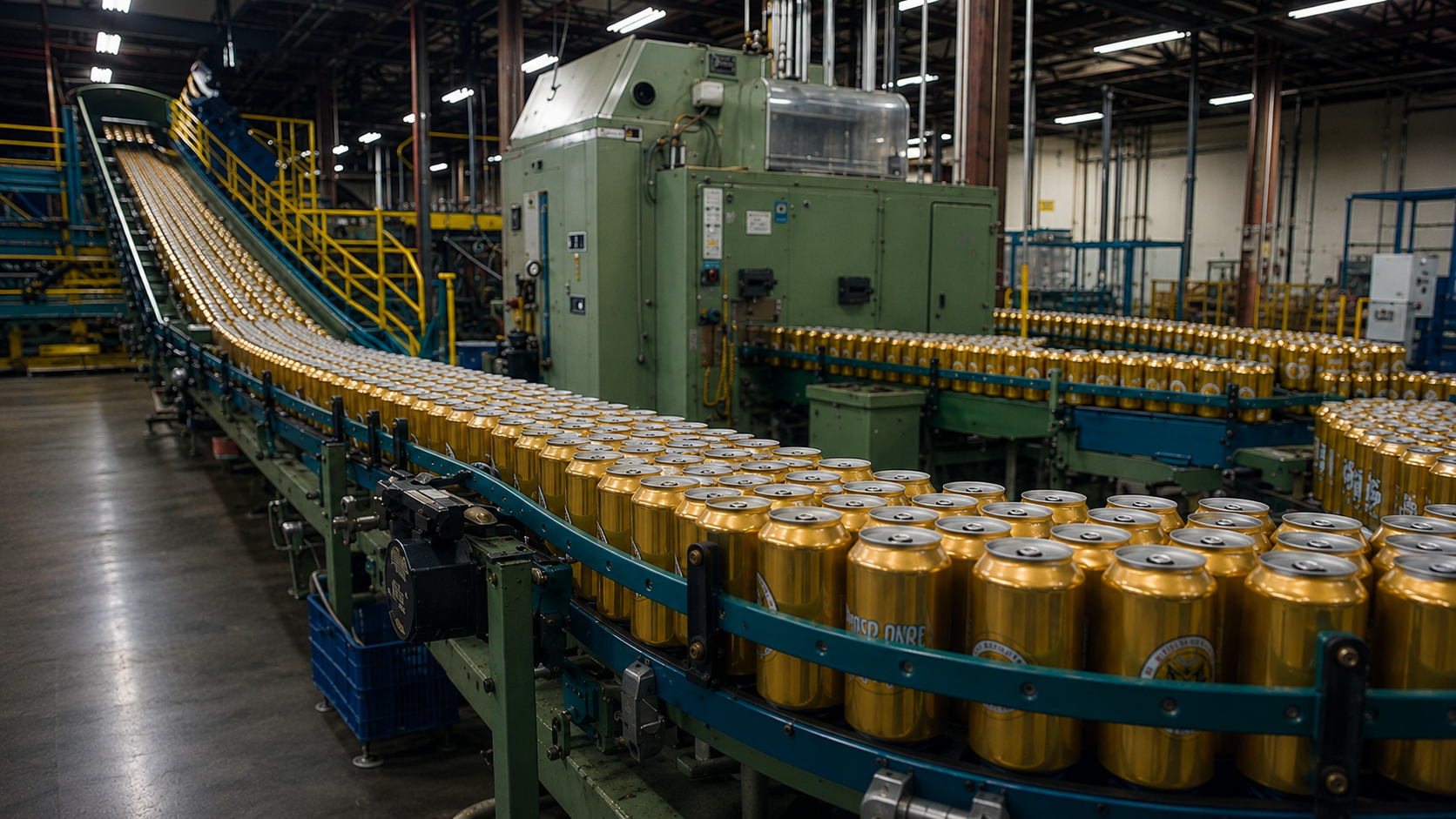
Top 3 Operational Challenges in Beer Manufacturing
Greater SKU complexity creates operational bottlenecks
Filtration downtime reduces throughput
Conservative Clean-in-Place standards waste chemicals, water, and time
.png.png)
Andre Fourie
VP of Sustainability
AB InBev is leveraging digital tools to support our work in water stewardship. [We] piloted an approach in our Leuven Brewery in Belgium...leveraging a network of sensors to collect water use data in real time and deliver efficiency solutions through an AI-powered platform.
[Laminar enables AB InBev] to reduce water usage in our brewing operations. The successful pilot with [Laminar] is being rolled out to a number of breweries across the business.

Safeguard Your Long-term Productivity & Sustainability Goals
improves each cycle based on real process conditions, operational improvements compound over time.

.svg)
.svg)
.svg)
.svg)

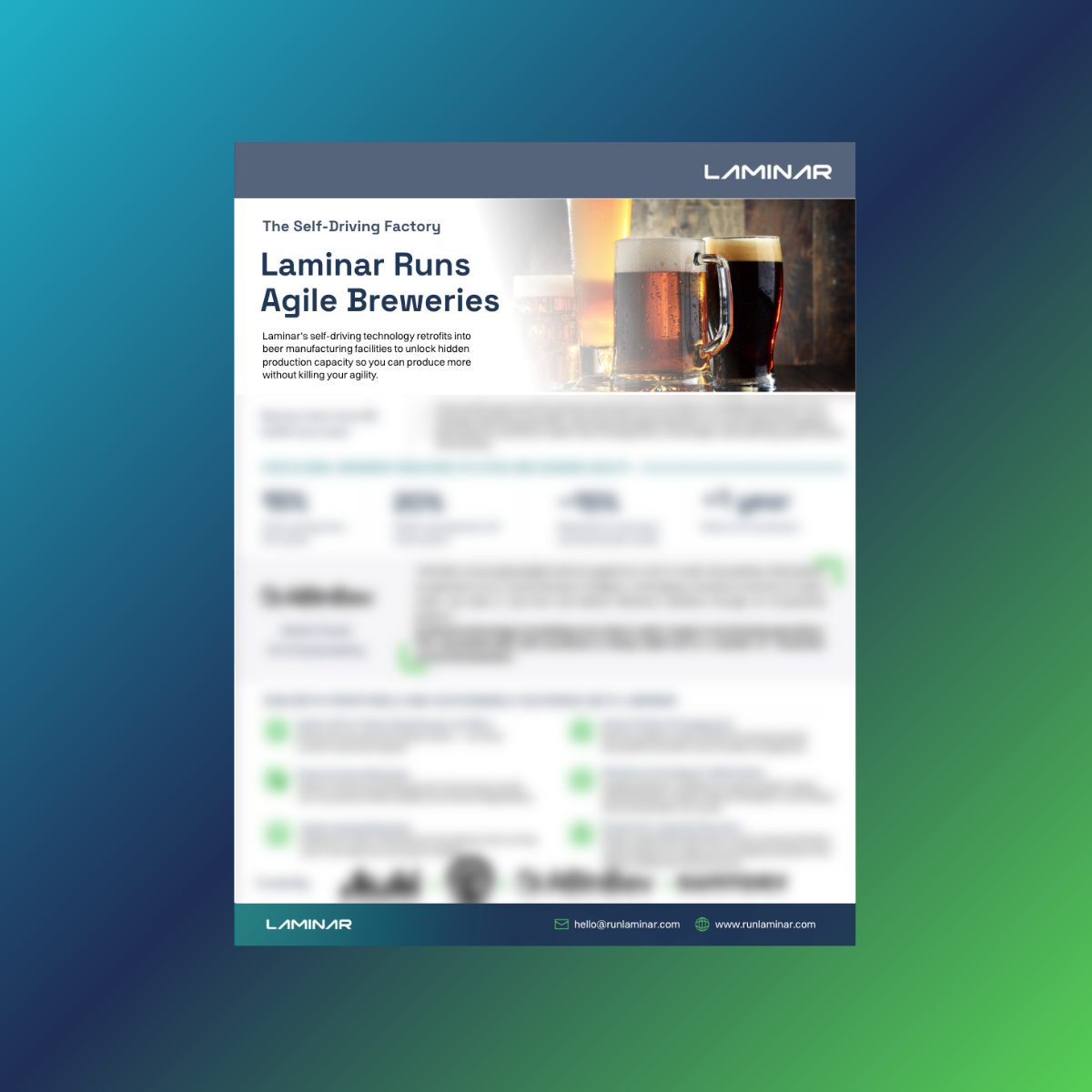
Laminar for Brewing and Beer Manufacturing Fact Sheet
There's no technology out there like Laminar.
As a company that's always pushing for innovation, Monin sees this as the kind of AI-driven solution that gives manufacturers a real edge. The fact that Laminar delivers on both sustainability and profitability makes it an easy decision to pilot and scale.
We've been making quality food products for over a century, and one thing that's kept us ahead is a willingness to invest in technology that actually moves the needle. Laminar is a unique application of technology, it lets us optimize our cleaning processes in ways we couldn't before. We're piloting ML models and sensors now and already planning to scale, because the technology checks both boxes that matter most to us: sustainability and profitability.

Winland Foods is committed to exceeding consumer expectations with a high-quality food experience from the field to the table. Innovation is a critical pillar of our mission to provide superior value, and we've partnered with Laminar to enhance production flexibility with insights previously invisible to the naked eye.
Leveraging their machine learning technology, we expect to enhance our production agility, reduce waste, and gain greater capacity so we can continue to deliver more world-class quality and value to our customers.

Our partnership [with Laminar] has allowed for an 18% reduction in downtime during cleaning, which increases productivity and lowers costs in the supply chain. We have also saved 40% of a cleaning cycle's water consumption by using the technology.

Laminar has industrialized exceptional technology that delivers results not found anywhere else in the market. The ability to generate real-time spectral fingerprints for each fluid and determine the liquid signature enhances our efforts to develop the best products and meet market demands.
Their team is a true partner in our shared goal to identify productivity opportunities and use cases that are distinctive to their technology. We're excited to leverage Laminar in creative ways that support our innovation goals, which give us our advantage in the marketplace.
.svg)
At its core, INX is a chemistry company—where precision, performance, and science converge. Laminar’s mastery of chemical intelligence, paired with its ability to transform real‑time chemical data into actionable insight, immediately set them apart. Their technology represents a new frontier in protecting the formulation integrity and product excellence that define who we are. As we push the boundaries of Industry 4.0 and reimagine what’s possible in modern manufacturing, Laminar stands out as a truly differentiated solution. We haven’t seen anything else in the market that delivers this level of chemical insight and control. We’re energized by where Laminar’s technology enables us to go—today and as we shape the future of intelligent, data‑driven chemistry.
At Coke Northeast, we’re continually exploring technologies that deliver meaningful results at the intersection of operational performance and sustainability. Laminar's AI-powered spectral analytics platform has helped us reduce water, chemical, and energy use within our CIP process while simultaneously maintaining quality and increasing production time. We look forward to expanding our partnership and evaluating additional use cases within our manufacturing facilities.


