

Coca-Cola System Promotes Sustainability Activities through Co-creation with Startups

.webp)
.svg)
Originally published in Japanese on coca-cola.com on 12-11-2025.
On November 25, 2025, Coca-Cola Japan Co., Ltd. held an information session to introduce the latest examples of initiatives it is promoting in the field of sustainability through co-creation with startup companies.
The Coca-Cola system, which consists of Coca-Cola Japan Co., Ltd. and five bottling companies across the country, works with a wide range of partners in the supply chain to promote sustainability.
Among these activities are startups that are taking on challenges that are difficult to solve using conventional technologies and approaches, leveraging their advanced technologies and unique ideas. At the briefing, representatives from each company introduced three specific examples from among these, discussing their background, progress, and outlook for the future. This article provides an overview of each initiative.
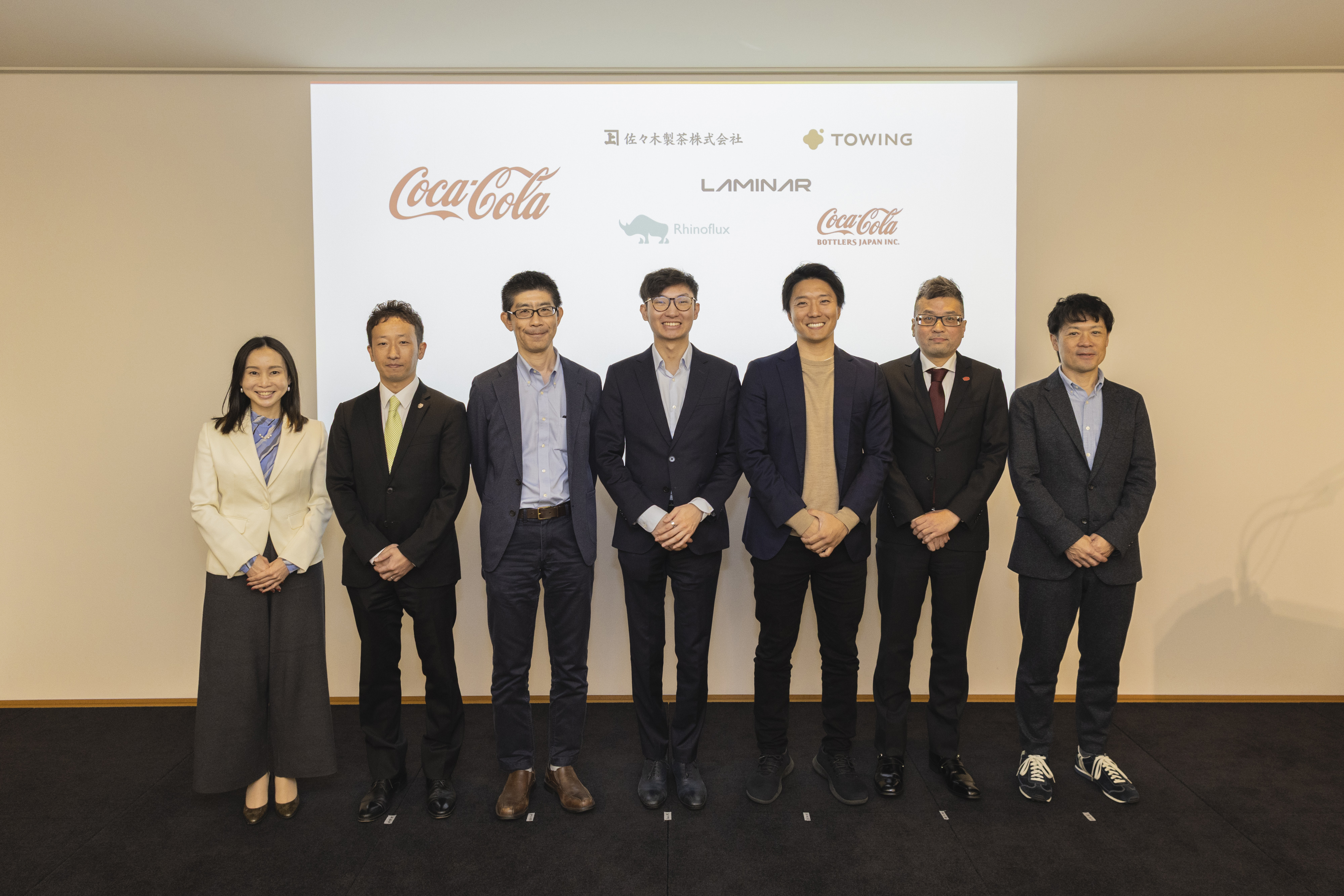
1. Improving soil health in tea fields with high-performance biochar
In recent years, domestic tea production has been declining due to factors such as the aging of producers and a shortage of successors, and as a countermeasure, there is a need to realize a highly efficient and sustainable production system. Furthermore, it is essential for the Coca-Cola system to build a new recycling model that more effectively reuses residues generated in the manufacturing process of beverages such as tea and coffee, and circulates them within the supply chain.
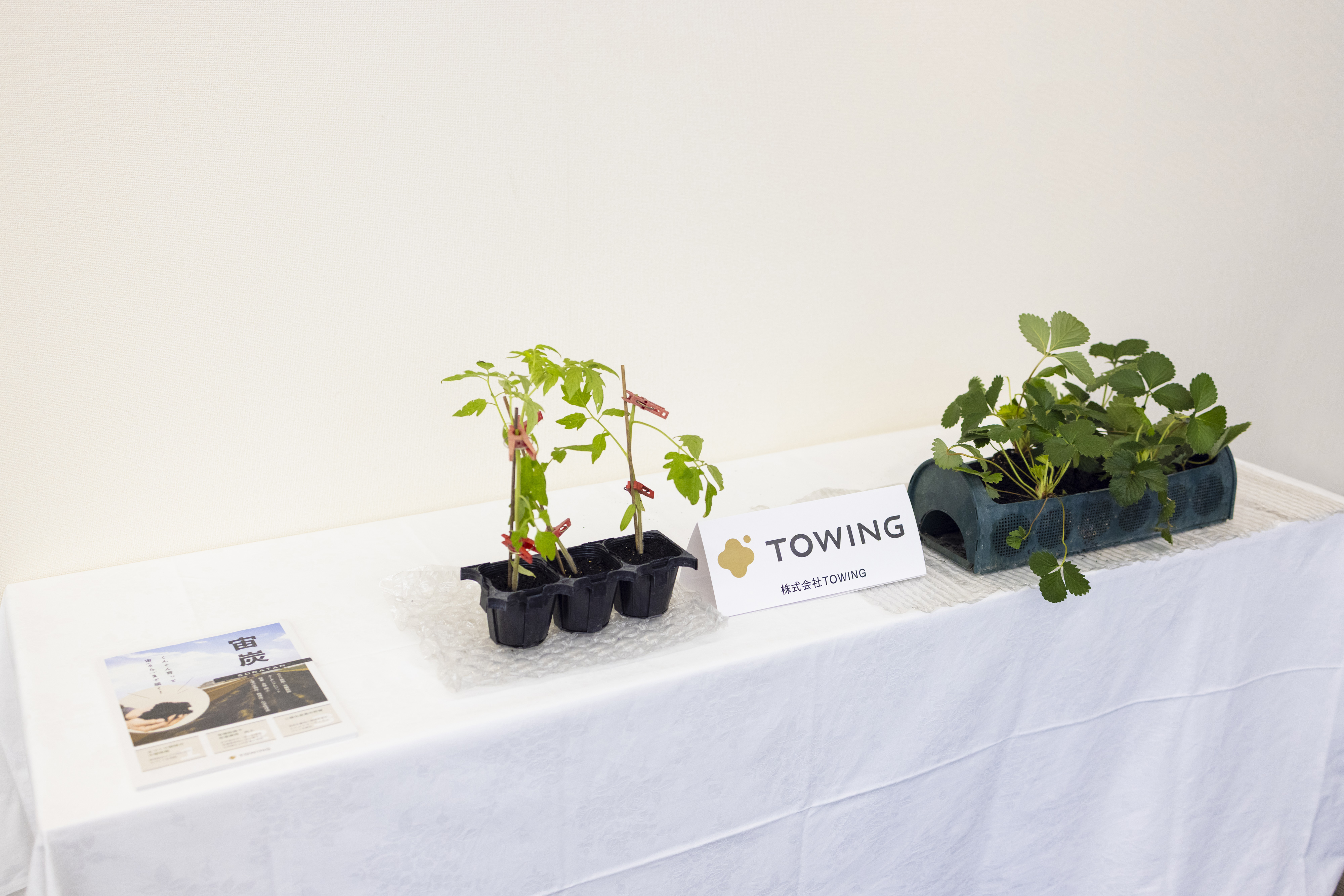
To address these issues, the Coca-Cola system has partnered with TOWING Co., Ltd., an agritech startup spun out of Nagoya University. TOWING develops, manufactures, and sells "Soratan," a high-performance biochar made possible by a unique technology for efficiently selecting and cultivating soil-derived microorganisms, and provides related technical services. When applied to farmland, Soratan improves soil health, increasing fertilizer efficiency and promoting crop growth while reducing the use of chemical fertilizers. It also contributes to reducing greenhouse gas (GHG) emissions by fixing carbon in farmland.
In February 2025, a demonstration experiment began to confirm the effectiveness of applying "chutan" to the tea fields of Sasaki Tea Co., Ltd., a tea producer and retailer. Aiming to promote reduced chemical fertilizer use and organic conversion, improve tea leaf growth, and reduce GHG emissions from farmland, the impact of crop growth stages, age, and continuous input will be evaluated. Furthermore, utilizing the knowledge that TOWING has cultivated to date, there are plans to verify the carbonization and chutanization of tea leaves from Coca-Cola Bottlers Japan Inc.'s factories.
2. Water conservation in beverage production facilities using sensors/AI
Coca-Cola lines and equipment are cleaned regularly and thoroughly daily to ensure product quality. The cleaning process relies on clean-in-place systems, which act like giant industrial dishwashers that are programmed on fixed timers to run water, chemicals, and soap through the lines and equipment in cycles. While most beverage manufacturers use legacy timer-based processes, these processes are inefficient and resource-intensive.
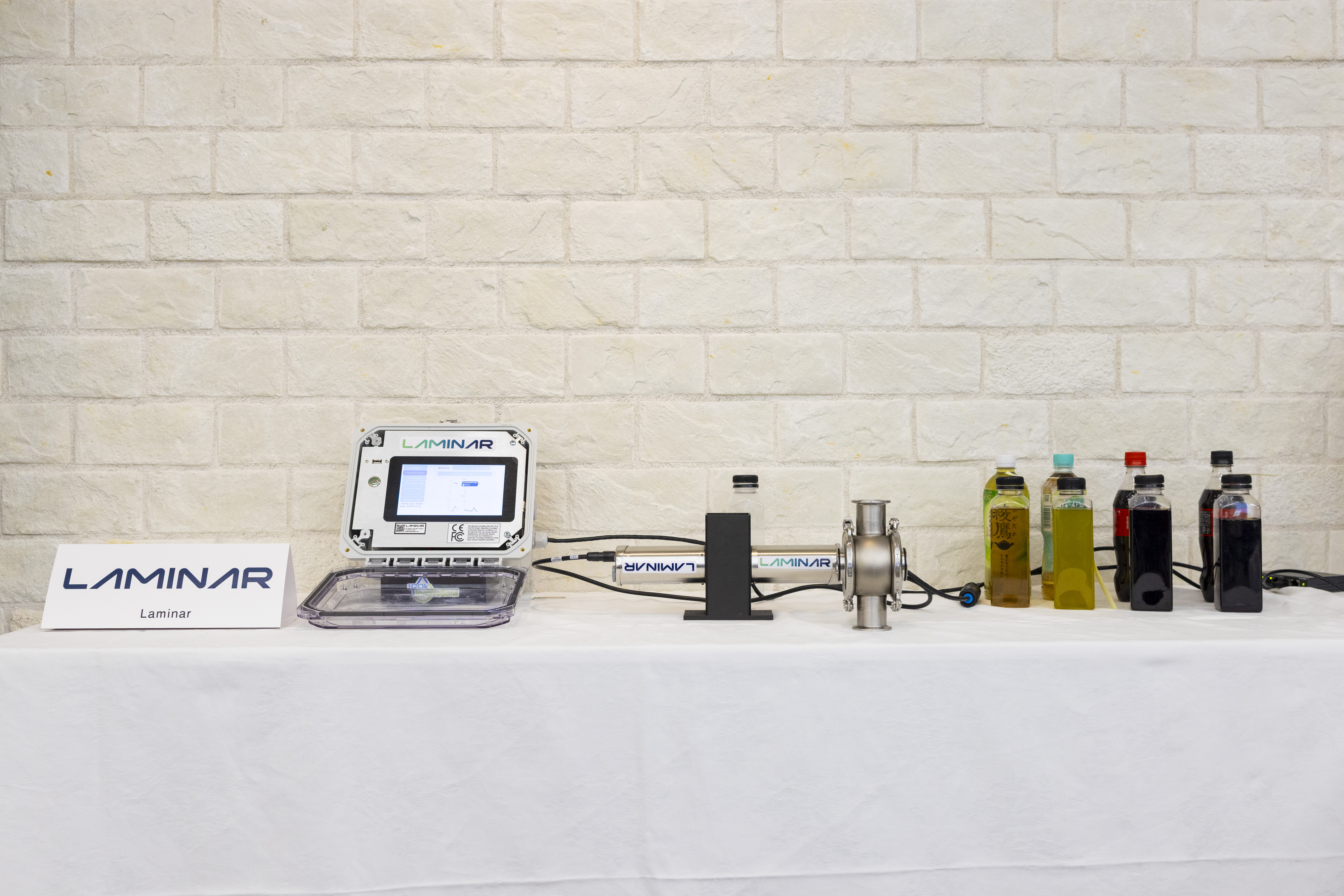
Laminar is the first to redesign this process to create highly efficient cleaning cycles. Laminar’s approach provides real-time visibility inside the pipes, monitoring every step of the clean-in-place cycle to dynamically adjust cleaning steps and resources, reducing water and chemical use while maintaining high sanitation standards.
Coca-Cola recognized the potential of Laminar’s unique approach to transform timer-based processes like clean-in-place and product changeover to dynamic optimization. Laminar uses proprietary spectral sensors, easily installed inline on any factory pipe, to instantly identify the unique chemistry of the flowing liquid. The unique signature is processed by Laminar’s purpose-built machine learning models that adjust the processes, optimizing them to use the least resources during cleaning or product changeover.
By deploying Laminar in Coca-Cola facilities, Laminar enabled faster, more sustainable operations and greater production capacity. The Coca-Cola Company began pilot trials using Laminar’s technology at a concentrate plant in France in September 2025, confirming water savings of over 10%. Plans are in place to expand the technology to plants worldwide. In Japan, demonstration experiments are underway at the R&D center’s test lines and at bottling partner plants. At the Moriyama concentrate plant, preparations to scale equipment installation are scheduled for 2026, with installation and demonstration trials planned for 2027.
3. Biomass power generation from plant residues discharged from factories
Coca-Cola Bottlers Japan is actively working to reduce waste and make effective use of resources in order to realize a recycling-oriented society. While the company already recycles tea leaves and coffee grounds as fertilizer and animal feed, the company's next challenge is to recycle these in a form with higher added value and return them to the manufacturing process.
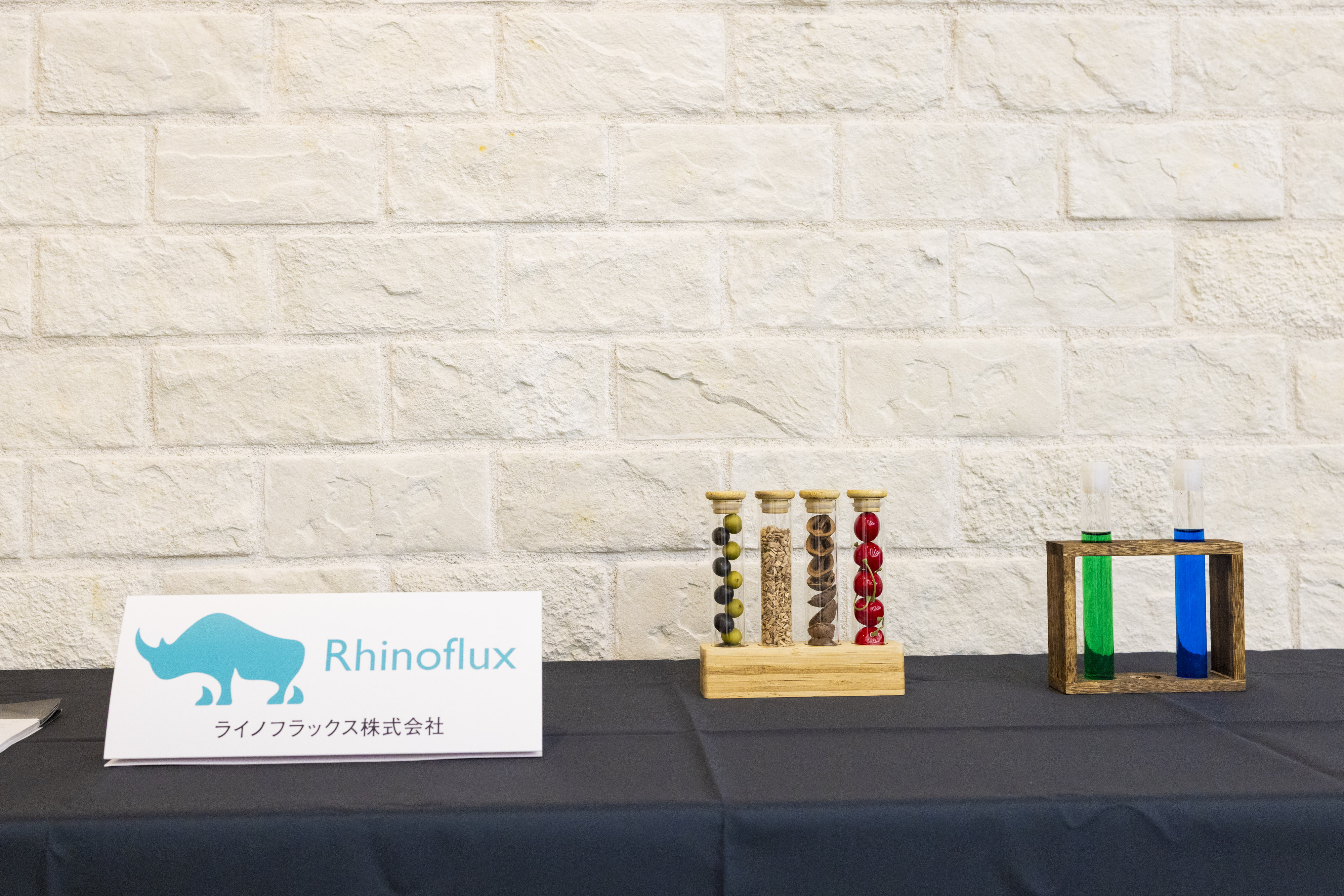
To achieve this, the company collaborated with Rhinoflux Inc., an energy company spun off from Kyoto University that develops next-generation biomass power generation technology. The company's "wet chemical looping technology" boasts the ability to efficiently generate electricity using biomass derived from wet raw materials (materials with a high water content), which have traditionally been difficult to reuse, making it suitable for processing tea and coffee grounds generated in the beverage manufacturing process. Furthermore, the power generation equipment has a compact design, allowing it to be installed on the manufacturing plant premises, which reduces the burden of transportation costs for tea and coffee grounds.
Coca-Cola Bottlers Japan has begun a demonstration experiment at its Kyoto plant in 2025, aiming to generate clean electricity and capture high-purity CO₂ from biomass derived from tea leaves and coffee grounds.
The Coca-Cola system will continue to work on sustainability issues with suppliers and partners throughout the entire value chain, aiming to reduce environmental impact and make effective use of resources while actively utilizing cutting-edge innovations.


